 All Caps
 ScopeCaps
 LightCaps
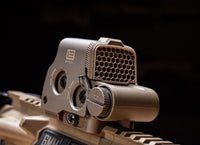 Red Dot Caps
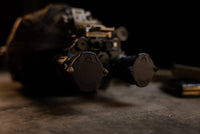 Night Vision Caps
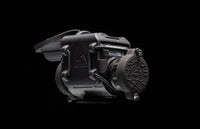 Thermal Caps
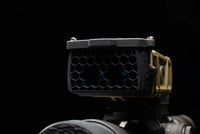 Specialty Caps
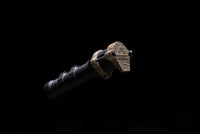 Lights
 Red Dots/HWS
 Magnified Optics
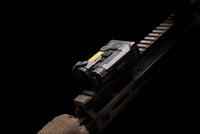 Lasers
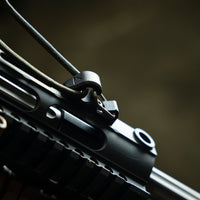 Slings
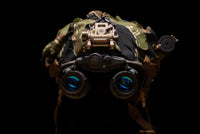 Night Vision Devices
 Thermal
 Helmets
 Accessories
 Camouflage
 Water
Water
 Faraday
 EDC
EDC
 Apparel
Article: Managing Your Signature Through Position Changes

Managing Your Signature Through Position Changes
A setup can work well while you are stationary but becomes more noticeable the moment you change position. Standing from a kneeling position changes your silhouette. Dropping prone changes where the rifle and equipment sit. Moving around cover can expose parts of your body or rifle that were previously hidden.
Movement signature reduction is both about moving slowly and controlling what changes when you move.
Why Do Position Changes Increase Your Movement Signature?
Position changes can increase your movement signature because more than your body is moving. Your silhouette, rifle, gear, and relationship to cover can all change during the transition. Even a movement lasting only a few seconds can reveal signatures that were controlled while you were stationary.
For example, you might be well concealed while kneeling behind cover. As you stand, your head and shoulders can rise above the background while more of the rifle becomes visible. At the same time, hanging equipment may shift, and reflective surfaces may change angles.
Managing these changes starts with paying attention to how your position affects your relationship with the terrain and cover around you.
Position Changes Can Expose More of Your Silhouette
Changing positions changes your height, width, outline, and how that outline appears against the background.
Standing, Kneeling, and Prone Create Different Profiles
Each position creates a different profile relative to the surrounding terrain. Standing creates the most height, while kneeling lowers your profile but may still leave your head, shoulders, and rifle above nearby cover. Going prone reduces height but can spread your body and equipment across a wider area.
None of these positions is automatically better for managing your silhouette. What matters is how your profile fits the terrain and what sits behind it. A low position can still stand out if your body or rifle creates a recognizable outline against a brighter or more open background.
The shape you create as you move between positions matters, too. During a transition, your body may briefly form a taller, wider, or less predictable outline than it does once you settle into the next position.
The Transition May Expose You More Than the Final Position
Your starting and ending positions can both be relatively concealed, while the movement between them creates more exposure.
For example, stepping over an obstacle can briefly raise your profile higher than it was on either side. Moving laterally can separate your outline from the background even when both positions offer useful concealment.
When evaluating where you start and where you finish, pay attention to the path between those positions. That path determines how your silhouette changes along the way.
Moving Through Cover Changes What Is Visible

As your position changes, so does your relationship to the cover, terrain, and background around you.
Cover Can Hide One Angle and Expose Another
Moving past the edge of vegetation, between trees, or around rocks can change what is visible even if your gear and camouflage stay the same. Changing elevation can have a similar effect by placing more of your profile above or below nearby cover.
Light can change during the transition, too. Moving from shadow into direct light may make parts of your body or equipment easier to see against the new background. This is why you need to consider the environment throughout the movement, not just from your starting position.
Watch What Crosses the Edge of Cover First
You do not need to expose your entire body for your profile to become more noticeable. Sometimes one part of your setup crosses the edge of cover first.
That might be the barrel of your rifle, your head or shoulders, a pack, or another piece of equipment extending beyond your main profile. As you change position, these individual parts may become visible before the rest of you does. So pay attention to what is exposed first as your angle of coverage changes.
Keep the Rifle Controlled While You Move
Your rifle has its own profile, and that profile changes along with your body. During a position change, the rifle can move outside your main outline, expose reflective surfaces, or contact gear and objects around you.
Watch Where the Rifle Moves During Position Changes
Pay attention to where each part of the rifle travels throughout a transition. A barrel that stays behind cover while kneeling may rise above it as you stand. Moving around an obstacle can push the rifle farther to one side, while changing its angle can expose an optic or accessory that was previously hidden.
The rifle can also swing away from your body while walking or climbing. When moving into prone, parts of it may contact the ground, vegetation, or nearby equipment.
Repeated Rifle Adjustments Add More Movement
A position change should not require a series of corrections just to regain control of the rifle. If you routinely have to pull it back toward your body, reposition the sling, move an accessory, or catch it after it swings, each correction creates more movement than the transition itself required.
Watch for these adjustments when testing your setup. If the same correction keeps appearing across different positions, look at what in the setup is causing it rather than treating the adjustment as a normal part of moving.
Gear Should Move With You, Not Independently From You

Once the rifle is under control, look at what the rest of your equipment does when you change positions. Ideally, your gear moves with your body and settles when you do. Anything that keeps swinging, bouncing, or shifting creates movement you did not need to make.
Loose Equipment Creates Secondary Movement
A position change may move your body once while loose equipment continues moving afterward. Gear that hangs outside your main profile can make this movement even more noticeable. It may also keep shifting for a moment after your body stops.
Look for anything that consistently moves on its own during transitions. Securing excess material or changing how an item is mounted can reduce this secondary movement without changing how you move.
Shifting Gear Can Also Create Sound
Loose equipment can also create an audible signature. Hardware may contact other hardware, or straps can catch and release as you move. Gear that extends away from your body may scrape against vegetation, rocks, or other terrain as you pass through.
You do not need to make every piece of equipment silent. Instead, pay attention to unnecessary contact caused by gear that shifts more than it needs to.
Extra Bulk Makes Transitions Harder to Control
Every item you add gives you something else to manage during a position change. More external equipment can create a larger profile, additional snag points, or more items that may need adjustment once you settle into position.
That does not mean carrying less gear is always better. Equipment that serves a purpose may justify the extra bulk and management it requires.
However, if something rarely provides useful capability, reconsidering where (or whether) it belongs can make the entire setup easier to control.
Test Your Setup Through Complete Position Changes
Test your setup by performing the movements you expect to make, rather than judging it from a single position.
Move from standing to kneeling, kneeling to prone, and back up again. Walk with the rifle, move around obstacles, pass through vegetation, and get into and out of supported positions when those movements are relevant to how you use your gear.
As you test, pay attention to:
- Profile: Did your body or rifle become more exposed at any point in the transition?
- Equipment: Did anything swing, bounce, snag, or shift?
- Rifle: Did it stay controlled throughout the movement?
- Sound: Did your equipment make unnecessary contact with other gear or your surroundings?
- Adjustment: Did you have to fix, move, or reposition anything afterward?
- Environment: Did a change in background, light, or cover make your profile more noticeable?
A setup that works well should help you maintain control without creating extra movement, exposure, or adjustments along the way.
Manage Your Signature From One Position to the Next
Movement signature reduction is not about staying perfectly still. It is about understanding what your movement reveals and keeping unnecessary signatures from coming with you.
If your setup swings, snags, shifts, or forces extra adjustments, explore One Hundred Concepts' purpose-driven gear to help eliminate unnecessary bulk and keep your rifle setup focused on what you need.

Leave a comment
This site is protected by hCaptcha and the hCaptcha Privacy Policy and Terms of Service apply.