
 All Caps
 ScopeCaps
 LightCaps
 Red Dot Caps
 Night Vision Caps
 Thermal Caps
 Specialty Caps
 Lights
 Red Dots/HWS
 Magnified Optics
 Lasers
 Slings
 Night Vision Devices
 Thermal
 Helmets
 Accessories
 Camouflage
 Water
Water
 Faraday
 EDC
EDC
 Apparel
Article: How Uniform Gear Creates a Recognizable Visual Signature
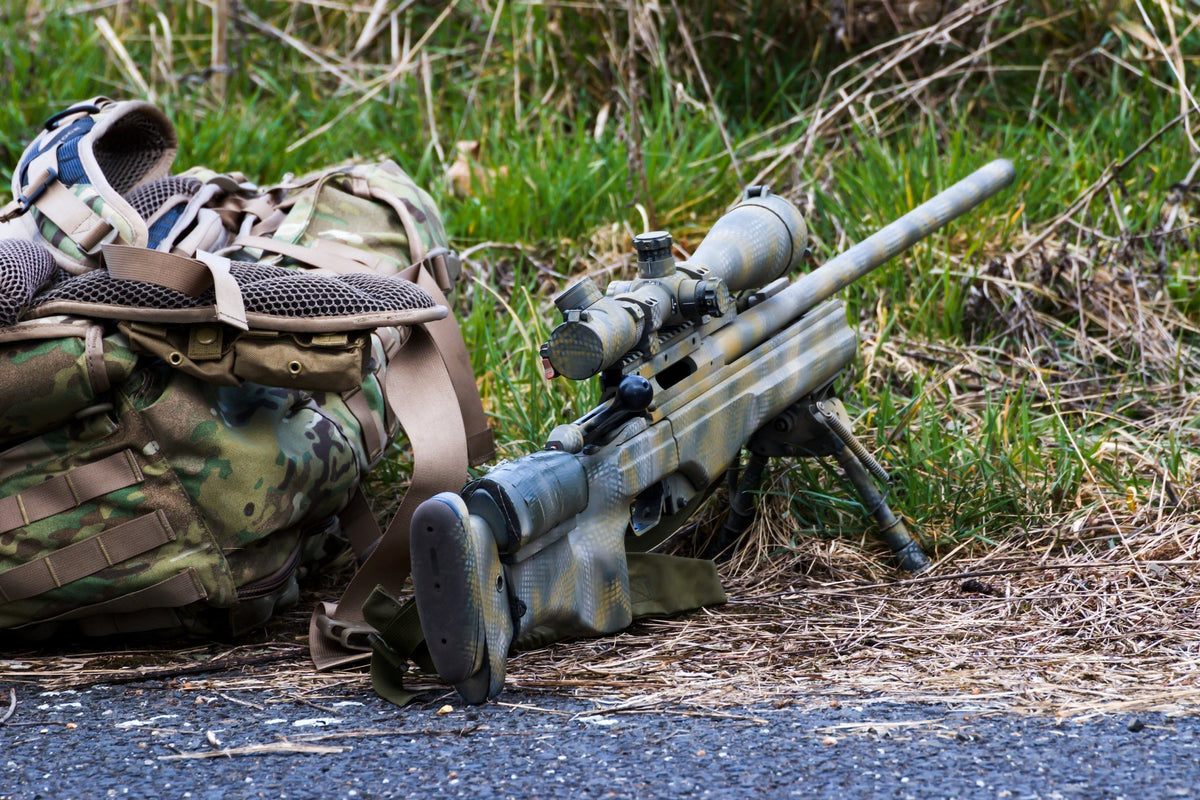
How Uniform Gear Creates a Recognizable Visual Signature
A well-organized setup often looks right when viewed on a bench or in a gear photo: matching colors, evenly positioned equipment, clean lines, symmetrical placement. But what looks organized to us will also look organized to someone observing it.
Why Can a Clean Gear Setup Hurt Tactical Gear Concealment?
A clean gear setup can hurt tactical gear concealment when symmetry, shapes, edges, and surfaces create patterns that stand apart from the surrounding environment.
Natural terrain varies in shape, spacing, texture, color, and shadow from one area to the next. Manufactured gear tends to be much more consistent in its lines, shapes, and spacing. When those characteristics line up across your setup, they make something artificial easier to spot.
That doesn't mean you should make a functional setup less organized. Instead, look for the places where the organization creates unnecessary visual consistency.
Symmetry and Repetition Create Recognizable Patterns
Uniformity becomes easier to notice when multiple pieces of gear create an obvious pattern. Symmetry is one way this happens, but repetition can have the same effect even when a setup isn't perfectly balanced.
Symmetrical Gear Placement Creates Visual Structure
Matching pouches on either side of a carrier, accessories mounted at the same height, or similar shapes balanced across a belt create a visual structure. The human eye is good at picking out this kind of organization, especially against terrain where shapes and spacing are less predictable.
That doesn't mean you should rearrange equipment simply to make your setup asymmetrical. If a symmetrical layout offers better access, balance, or functionality, that’s a good reason to keep it. However, your concealment strategy will need to support what your equipment needs to do, not make it harder to use.
Repeated Shapes and Spacing Reinforce the Pattern
Look at repetition separately from symmetry. Even an uneven setup can have repeated shapes, spacing, or hardware that gives the eye a pattern to follow. Several similar pouches near each other, evenly spaced buckles, or accessories mounted along the same line create a sense of repetition.
One exposed buckle or pouch may blend into the surrounding environment. However, put several identical shapes together, and they begin to form a pattern that is easier to recognize.
Clean Outlines Make Gear Easier to Recognize

Repetition creates patterns within a setup, but the outside profile matters too. Your colors may work reasonably well with the environment, while the overall shape of your gear remains easy to pick out.
Straight Edges Stand Apart From Irregular Terrain
Rifle handguards and rails, pack edges, helmet edges, pouch rows, and tightly routed straps can all create straight, defined lines. These shapes can become especially noticeable when they cross an open or uncluttered background.
Pay attention to gear that extends beyond the main profile as well. An accessory that sticks out from a rifle, pack, or helmet can create a distinct edge that makes the larger shape easier to recognize.
Small Additions Can Change the Overall Profile
Each piece of external gear can add another edge, shape, shadow, or point of bulk to the complete setup. One addition may have little effect, but several can gradually make the profile larger and more defined.
That doesn't mean a stripped-down setup is always better. Gear with a clear purpose may be worth the additional profile it creates. Just be aware of what each addition changes.
Similar Surfaces Can Create Repeated Highlights
Uniformity isn't limited to shape and spacing. Gear can also become recognizable when several similar surfaces respond to light in the same way.
Repeated Highlights Can Reveal a Pattern
Identical polymer hardware, exposed buckles, smooth coatings, and similar metal components may all produce highlights under the same lighting conditions. A single highlight may disappear into the surrounding visual clutter. But several similar highlights can start to reveal structure, especially when they appear in a recognizable arrangement.
Exposed lenses can also contribute, although reflections from optics depend on factors such as lighting and viewing angle. Check out Is Scope Glint Real for a deeper look.
Instead of looking only for one obviously shiny component, look at how the surfaces across your entire setup interact. Several small points that seem insignificant on their own can become more noticeable when they repeat across other gear.
Smooth Surfaces Can Preserve Recognizable Gear Shapes
A camouflage pattern can help your gear blend with the surrounding colors and contrasts, but it doesn't change the physical shape underneath.
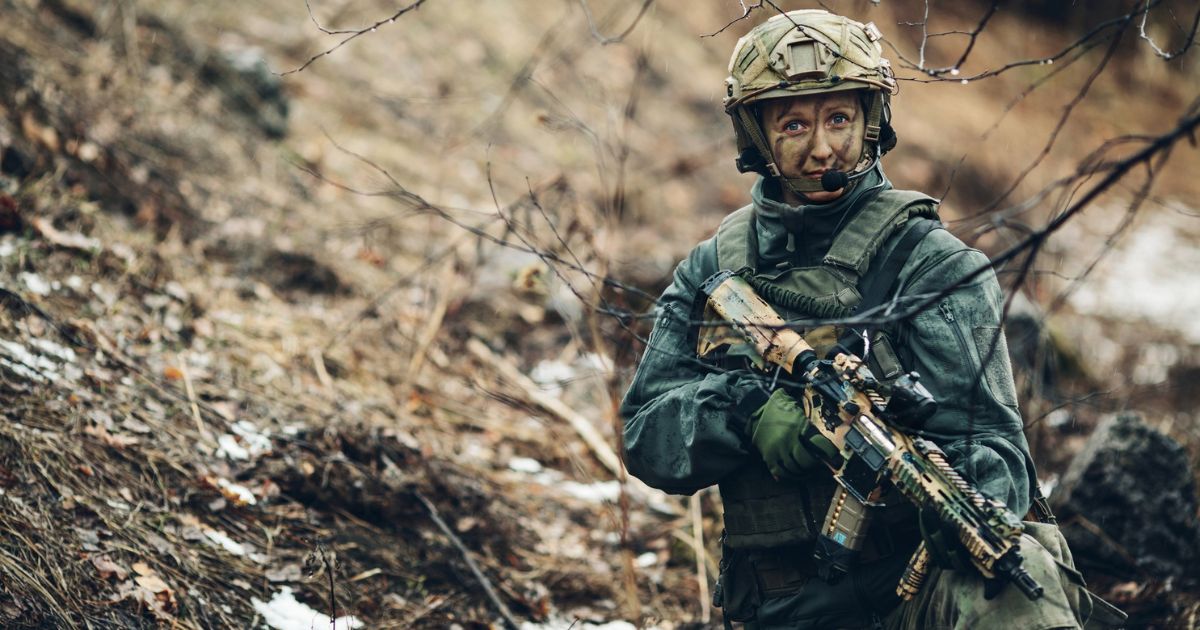
Think about a helmet with a smooth, rounded surface or a pack with a large, flat panel. Even when the color works well with the environment, the uninterrupted surface can make the object's shape easier to follow. Its edges, shadows, and overall geometry still give the eye clues about what it's seeing.
When you evaluate your setup, don't look only at color. Look for large, smooth areas that make it easy to trace the shape of a helmet, pack, rifle, or other equipment against the background.
Check Your Concealment Setup From More Than One View

Once you understand what can make a setup more recognizable, check how those features actually appear on your gear. A setup that appears well concealed at arm's length may look different at a different distance, angle, background, or lighting.
Photograph or observe your setup from realistic distances and positions. Check it from the side as well as the front, and compare how it looks against both open and cluttered backgrounds. Direct sunlight, shade, and different body positions can also reveal features you didn't notice up close.
Pay particular attention to:
- Obvious symmetry: Look for balanced shapes that immediately catch your eye.
- Repeated shapes or spacing: Notice pouches, hardware, or accessories that form a recognizable pattern.
- Long, uninterrupted edges: Check whether straight lines make the overall profile easier to follow.
- Clusters of similar highlights: Watch for several surfaces reflecting light in a similar way.
- Large areas of uniform texture: Look for flat surfaces that preserve the shape underneath.
- Gear outside the main profile: Check for equipment that makes the body or rifle outline more distinct.
Repeat the check while standing, kneeling, prone, and moving when practical. Then use what you observe to guide your changes. If one area consistently stands out, address that area rather than adding concealment material everywhere.
Do Not Break Up a Setup Just for the Sake of Breaking It Up
Once you've identified what stands out, change the specific features that are creating the problem. Just keep in mind that random asymmetry isn't the goal.
Before moving equipment or adding concealment material, consider whether the change reduces your visual signature without making the setup worse at its actual job.
Ask a few practical questions:
- Function: Can you still access and use everything the way you need to?
- Profile: Did the change reduce obvious edges, repeated shapes, or other recognizable features?
- Surface: Are large uniform areas or repeated highlights still noticeable?
- Movement: Is everything secure when you change positions or move?
- Environment: Does the change make sense against the terrain and conditions where you'll use the gear?
Sometimes the right decision is to leave something alone. A pouch may need to stay in a particular position for access, or an accessory may create some additional profile because it serves an important purpose.
Tactical concealment works best when it supports the complete setup. Make deliberate changes to what actually stands out, but don't trade function for irregularity simply because irregularity looks more concealed.
Build Your Setup Around Function, Then Look at the Complete Signature
A clean, organized setup isn't automatically a problem. The issue starts when symmetry, repeated shapes, defined outlines, or consistent surfaces make your gear easier to recognize against the environment.
So if something stands out, make changes with a purpose. Good tactical gear concealment reduces unnecessary visual cues while keeping your equipment secure, accessible, and ready to do its job.
Explore One Hundred Concepts gear designed to help you build a purpose-driven, low-signature setup.

Leave a comment
This site is protected by hCaptcha and the hCaptcha Privacy Policy and Terms of Service apply.