
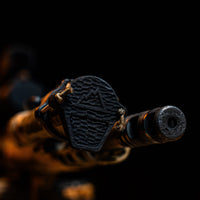
 All Caps
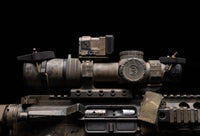 ScopeCaps
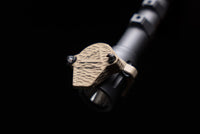 LightCaps
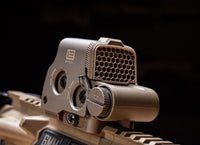 Red Dot Caps
 Night Vision Caps
 Thermal Caps
 Specialty Caps
 Lights
 Red Dots/HWS
 Magnified Optics
 Lasers
 Slings
 Night Vision Devices
 Thermal
 Helmets
 Accessories
 Camouflage
 Water
Water
 Faraday
 EDC
EDC
 Apparel
How to Run Modern Gear Without Increasing Your Signature
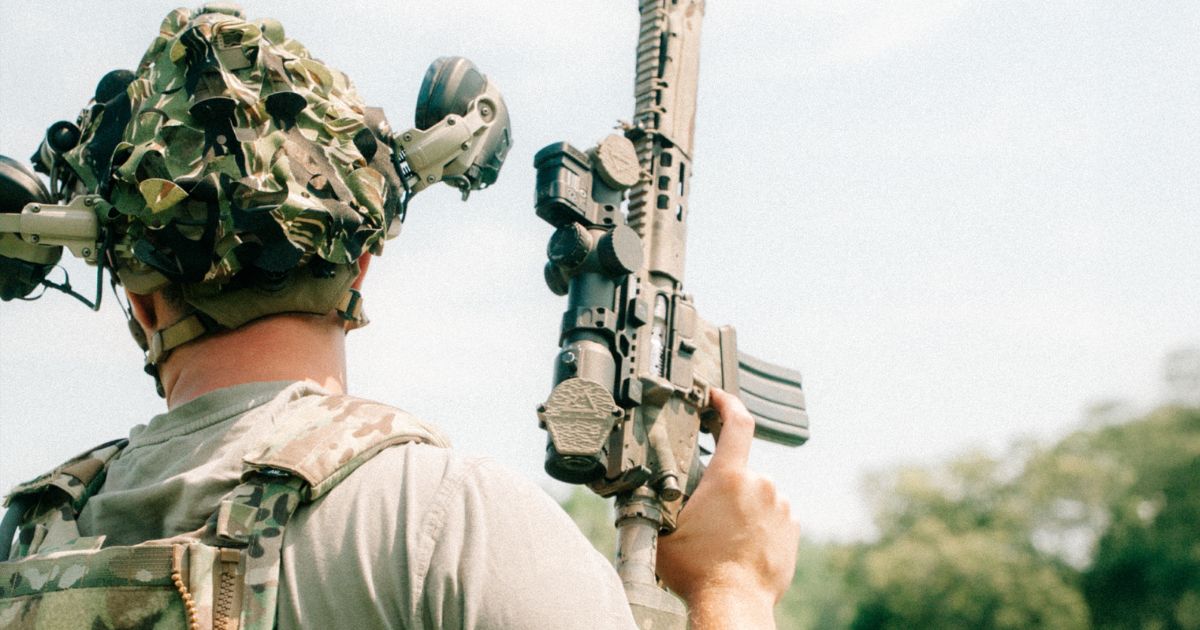
Modern shooting gear can give you capabilities that were difficult or impossible to achieve with a single setup in the past. But every optic, mount, cable, light, and electronic device also adds surfaces, shapes, bulk, and potential sources of reflection or emission.
That does not mean the answer is stripping your setup down to the bare minimum. Useful capability is worth carrying when it helps you accomplish what you need to do. The question is whether each capability is worth the signature it adds and whether you have integrated it well enough to reduce that signature.
Where Modern Shooting Gear Creates Additional Signatures
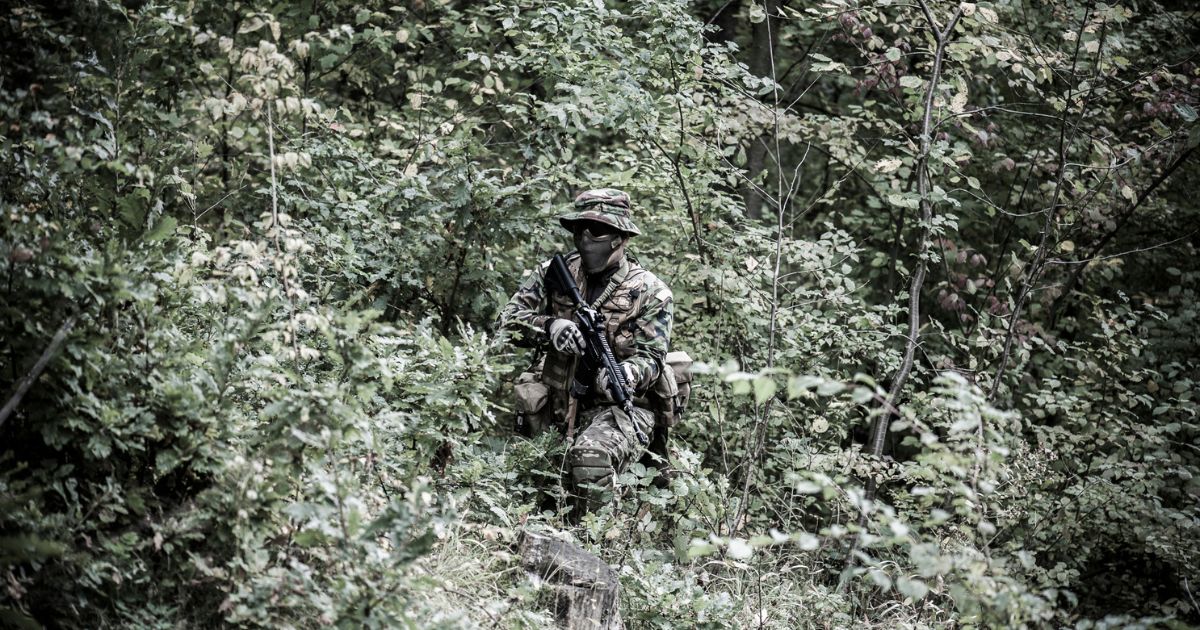
Once gear earns a place on your setup, look at what its presence changes. Modern shooting gear can add exposed glass, reflective hardware, loose components, and bulk that make your equipment more noticeable than it needs to be.
The goal here is not to eliminate every potential signature but to recognize where your equipment creates one so you can decide what needs attention.
Optics and Exposed Lenses
Rifle scopes, red dot sights, magnifiers, and thermal optics all put glass on your rifle. Depending on the setup, you may have several exposed lenses pointing in different directions. Those lenses can reflect light when left uncovered.
Larger optics also add physical size, especially when you start combining a primary optic with a piggyback or offset red dot, magnifier, or other supporting equipment.
Some of that size is necessary. A larger objective lens or thermal optic may provide a capability you specifically need. The important distinction is between the size required for the job and the exposure you can manage.
Reflective Mounts and Hardware
The optic itself is not the only surface worth checking. Precision shooting equipment often comes with mounts, brackets, screws, fasteners, and other hardware. Wear can also expose brighter material on edges and contact points that were less noticeable when the equipment was new.
A covered optic does less for your overall signature if the surrounding mount or hardware still catches light, so look at the complete assembly rather than stopping your inspection at the lens.
Cables and Switches
Lights, lasers, and other electronic shooting accessories often come with cables and remote switches. These components can create problems when they are treated as an afterthought.
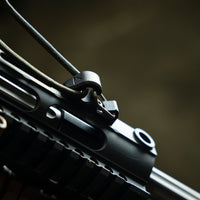
Excess cable may loop away from the rifle, move independently, or catch on other equipment. Poorly positioned switches can also force you to add more cable or place components where they create unnecessary clutter.
Night Vision and Helmet Setups
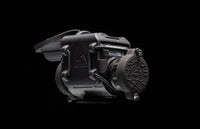
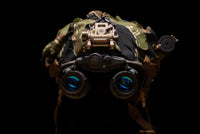
Night vision may help you see, but adding the device also changes the size, shape, and complexity of your helmet setup.
But the night vision unit is only part of that change. Mounts, battery packs, cables, retention systems, and supporting accessories all project from the helmet or add to its overall profile. The capability may require additional gear, but unnecessary projection and clutter do not have to come with it.
Integrate Gear Instead of Simply Attaching It

Once you know where your gear is adding signature, look at how those components are working with the rest of your setup. You want to maintain capability while reducing the signature created by the equipment's setup.
Keep Gear Tight to the Platform
Mount equipment as close to the rifle or helmet as its function allows. Accessories that project farther than necessary increase the overall profile and are more likely to catch on your surroundings or other gear.
This does not mean forcing everything into the smallest possible footprint. Controls still need to be accessible, optics need a usable position, and night-vision equipment needs room to function properly.
Instead, look for unnecessary space and projection. If two mounting positions offer the same capability, the one that keeps the equipment closer to the platform will usually require less to manage.
Route and Retain Cables
Cables should stay close to the equipment they support. Loose loops and excess cable can hang away from the rifle or helmet, move independently, and snag as you move through your environment.
Route cables along the platform where practical and retain any excess rather than leaving it exposed. Place switches where you can reach them without creating extra clutter or forcing cables across areas where they are likely to catch.
Good cable routing keeps the setup cleaner while making the equipment easier to use and less likely to interfere with other components.
Manage the Signature You Cannot Remove
Some signatures come with the capability. A rifle scope needs an objective lens. Night vision equipment changes your helmet profile. Mounts and hardware need to remain exposed so the equipment can do its job.
Instead of trying to eliminate those signatures, manage the parts you can.
Cover exposed lenses when you are not using them, or use an anti-reflective device where appropriate. Check mounts and hardware for reflective surfaces. If an optic needs to be large, pay closer attention to how the rest of the setup is positioned around it.
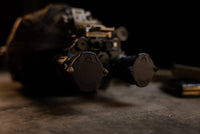
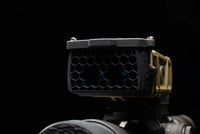
Solutions such as ScopeCaps and HexCaps are useful for this reason. They let you address exposed glass without removing the capability the optic provides.
A well-integrated setup avoids adding more signatures than the capability requires.
Electronic Gear Creates Active Signatures Too
Electronic gear adds another consideration because its signature can change when you turn it on. A night vision setup, IR illuminator, laser, or white light may be well integrated physically and still create an avoidable signature through how you use it.
That makes activation discipline part of managing equipment.
Infrared Is Not Automatically Invisible
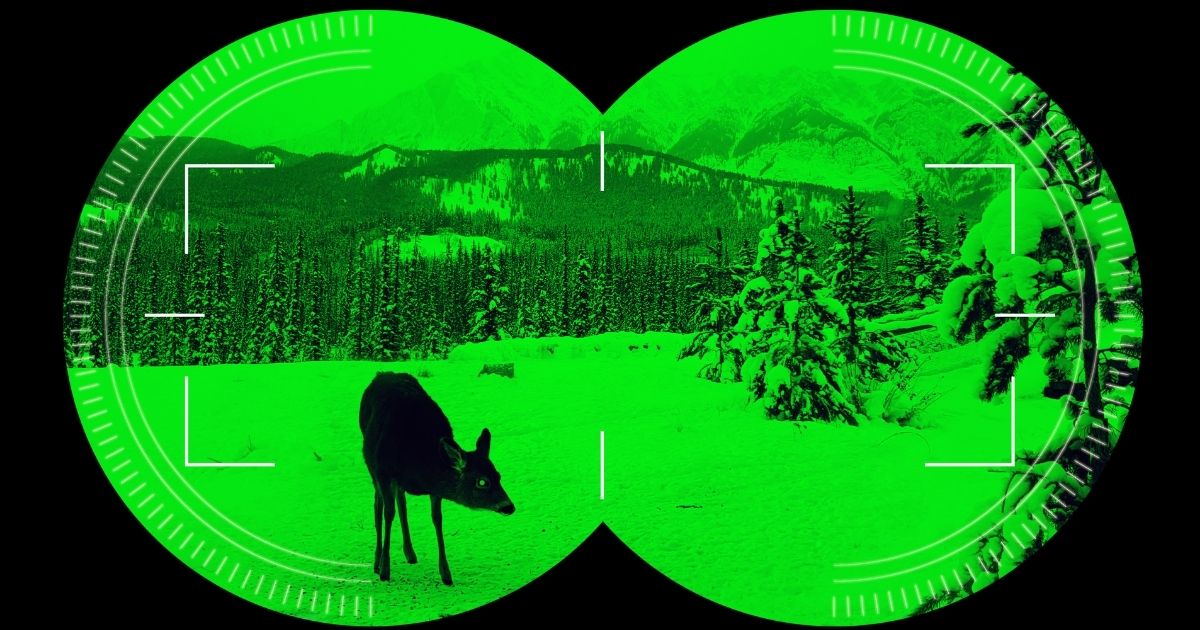
Infrared (IR) light may be invisible to the naked eye, but that does not make it undetectable. Someone else using night vision may be able to see an IR illuminator or laser that would otherwise go unnoticed.
Treat IR as an active emission rather than an inherently covert one. Turn it on when it provides a useful advantage, and turn it off when you no longer need it. The same principle applies to other electronic equipment. If activating a device creates light or another detectable output, its use should be deliberate.
Capability Should Be Available Without Always Being Active
Mounting a light, laser, or other electronic device gives you access to that capability. It does not mean the device needs to stay active whenever conditions allow you to use it.
Configure controls so you can activate equipment deliberately when you need it and shut it down just as easily. Good switch placement and cable routing support that by giving you predictable access without requiring extra movement or searching for a control.
Modern electronic gear is most useful when you control both sides of the equation: when the capability is available and when it becomes visible to someone else.
Audit Your Gear as a Complete System

Once your gear is assembled, stop evaluating each accessory on its own. Look at your rifle, helmet, and supporting equipment together. An individual component may make sense on its own but creates bulk, reflection, movement, or complexity once it becomes part of the complete setup.
A simple gear audit can help you spot those problems:
- Purpose: What capability does this item provide? If you cannot identify a clear use for it, reconsider whether it needs to stay.
- Bulk: Does it project farther or take up more space than necessary? Look for mounting positions or configurations that keep the same capability with less excess.
- Reflection: Does it add exposed glass, metal, or another reflective surface? Check the hardware around your optics and accessories.
- Movement: Can cables, straps, or accessories hang or move independently? Retain loose components where practical.
- Emission: Does the equipment produce visible or IR light? Make sure you can control when that signature becomes active.
- Integration: Could you mount, route, cover, or carry the capability more cleanly? Small changes in placement can improve the setup without removing useful equipment.
Then act on what you find. Remove gear that does not earn its place, and better incorporate the equipment that does. For signatures you cannot remove without sacrificing a needed capability, focus on controlling them instead.
Build Capability While Reducing Your Signature
Modern shooting gear will always come with tradeoffs, but what matters is how deliberately you manage it. Choose gear with a clear purpose, integrate it cleanly, control exposed surfaces and active emissions, and regularly review the complete setup.
Explore One Hundred Concepts' purpose-driven gear to help manage exposed lenses, organize your setup, and reduce your signature without giving up the capabilities you need.

Leave a comment
This site is protected by hCaptcha and the hCaptcha Privacy Policy and Terms of Service apply.