 All Caps
 ScopeCaps
 LightCaps
 Red Dot Caps
 Night Vision Caps
 Thermal Caps
 Specialty Caps
 Lights
 Red Dots/HWS
 Magnified Optics
 Lasers
 Slings
 Night Vision Devices
 Thermal
 Helmets
 Accessories
 Camouflage
 Water
Water
 Faraday
 EDC
EDC
 Apparel
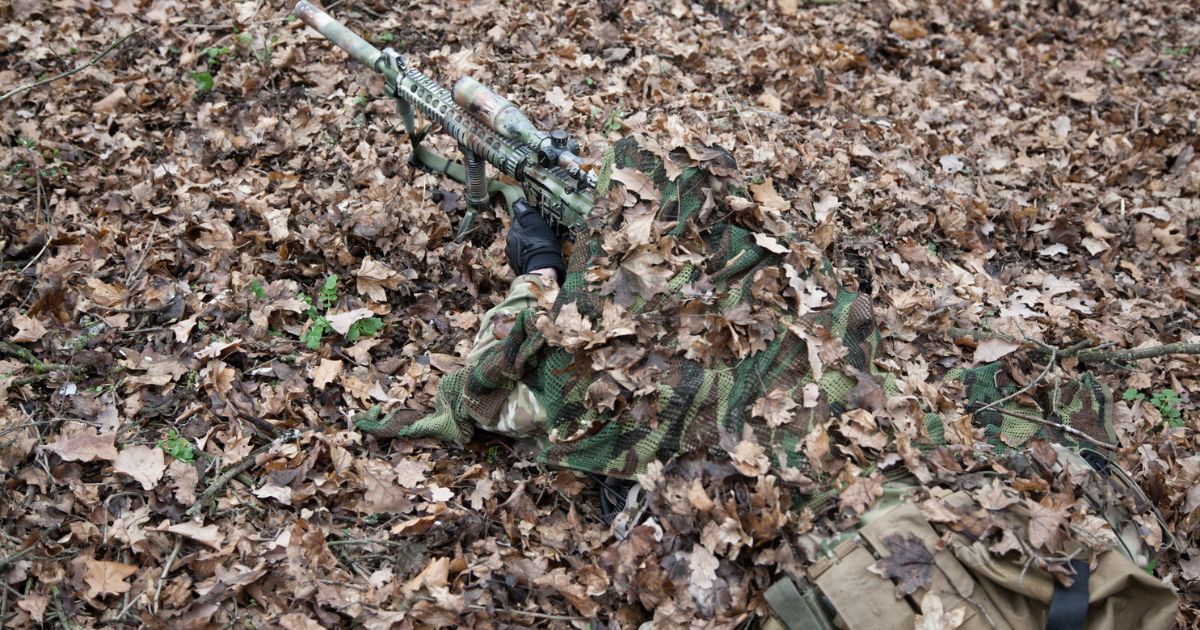
How Sudden Movement Reveals Even the Best Camouflage
Many people focus on camouflage patterns, colors, and concealment techniques, but movement often attracts attention before those factors matter. A well-camouflaged person can remain difficult to notice while stationary, yet become much easier to detect after a sudden movement draws the eye.
Understanding how movement affects detection is an important part of signature reduction. By learning what creates movement signatures and how to control them, you make better camouflage, concealment, and equipment choices.
Why Does Movement Defeat Camouflage?
Movement attracts attention because the human visual system is highly sensitive to motion.
Camouflage helps you blend into your surroundings, but movement changes how people process what they see. A pattern that breaks up your outline while stationary can become much easier to notice once you start moving.
That is why sudden movement and camouflage are closely connected, because even well-designed concealment fails if movement draws attention first.
Human Vision Is Designed to Detect Motion
People are naturally good at spotting movement. This ability developed as part of basic survival, helping humans identify threats and changes in their environment.
That ability still affects how we observe the world today. Colors, shapes, and details may blend into the background, but movement often stands out immediately. Once movement attracts attention, identifying the source becomes much easier.
Motion Becomes a Visual Cue
Many camouflage patterns rely on concepts such as cryptic coloration and disruptive coloration to reduce detection. These approaches help an object blend into its surroundings or break up its recognizable outline.
They can be highly effective while a person remains still, but movement changes that equation. As soon as an object begins to move, the motion itself becomes a visual cue. Even effective camouflage becomes easier to detect once movement attracts attention.
However, not all movement is equally noticeable. The human eye is especially sensitive to sudden changes in speed or direction. A quick head turn, fast position adjustment, or unexpected movement through vegetation tends to attract attention much faster than slow, deliberate movement.
Peripheral vision also plays an important role. People often detect motion before they recognize shapes, colors, or details. Once movement is noticed, attention naturally shifts toward that location.
This is why camouflage should be viewed as part of a larger signature-reduction strategy. Pattern selection matters, but controlling movement is often just as important.
Why Movement Amplifies the Other 7 S's of Camouflage
Movement does more than attract attention on its own. It also makes other visual signatures easier to notice.
A brief movement may reveal a recognizable shape that was previously hidden by vegetation or terrain. A position change can expose shine from optics, equipment, or reflective surfaces that were not visible moments before.
Even spacing becomes easier to recognize once motion draws attention to an area. Gaps between natural cover, equipment, or body parts often stand out more once an observer begins focusing on a specific location.
This is one reason movement plays such an important role within the broader 7 S's framework. Motion often helps people notice the other signs that give away a position.
For that reason, many signature reduction efforts become more effective when paired with movement discipline. Camouflage patterns, concealment techniques, and equipment management all work better when they are not competing against unnecessary motion.
To learn more, read The 7 S’s of Camouflage: A Guide to Signature Reduction.
Common Sources of Unnecessary Movement in the Field

Not all movement comes from traveling across terrain. Many visual signatures are created by small, repeated actions that happen while observing, waiting, or preparing equipment. Recognizing common sources of unnecessary movement is the first step toward reducing them.
Constant Position Adjustments
Frequent position changes are one of the most common causes of movement signatures. You might shift your weight, adjust your elbows, move your feet, or change posture to improve comfort. While occasional adjustments are sometimes necessary, constant movement creates repeated visual cues that can be noticed from a distance.
Restless movement is especially noticeable during longer observation periods. Small motions that seem insignificant up close can stand out when viewed against a stable background.
Whenever possible, build a position that allows you to remain comfortable for extended periods. The fewer corrections you need to make, the less movement you create.
Excessive Head and Optic Movement
Observation is necessary, but many people move more than they realize while scanning. Turning your head, peeking around cover, or moving optics from one area to another can create obvious motion signatures. In some cases, the scanning technique becomes easier to detect than the person conducting it.
A more deliberate approach is often more effective. Slow, controlled observation allows you to gather information while reducing the amount of movement visible to others. In many cases, your eyes can cover much of the area you need to observe without requiring obvious head or body motion.
You will also find that slower scanning helps you notice more details because your eyes spend more time processing each section of terrain.
Equipment Handling and Administrative Tasks
Many movement signatures are created by routine tasks rather than tactical movement. Checking equipment, adjusting pouches, accessing gear, retrieving notes, repositioning tools, or confirming settings can all generate unnecessary motion.
These actions are often performed out of habit rather than necessity. Over time, frequent equipment checks create a pattern of movement that draws attention even when the individual remains in place.
Whenever practical, organize equipment so that critical items are easy to access and require minimal handling.
Gear That Moves Even When You Don't
Sometimes movement comes from equipment rather than the person wearing it. Gear sway occurs when pouches, slings, straps, or accessories continue moving after you stop. A loose sling swings while walking, or dangling accessories bounce during movement.
This secondary motion often attracts attention because the movement appears isolated against an otherwise still position. Loose equipment also creates additional visual clutter, making movement easier to notice and track.
For that reason, signature reduction is also about managing the movement of the equipment you are carrying. Securing loose gear, reducing unnecessary accessories, and minimizing gear sway all help prevent motion from revealing your position after you have already stopped moving.
How to Reduce Unnecessary Movement in the Field

Reducing movement signature does not mean remaining completely still. Fieldcraft requires movement for observation, navigation, equipment use, and position changes. The goal is not to eliminate movement but to make movement deliberate and necessary.
A simple way to think about it is: observe, stabilize, and move. This sequence helps reduce unnecessary motion before it happens, instead of trying to correct it afterward.
Observe
Before moving, take time to evaluate the area around you.
Identify where you plan to stop and what you need to accomplish once you get there. Having a clear objective helps reduce hesitation, backtracking, and unnecessary position changes after movement begins.
Observation also helps reduce unnecessary repositioning. Rather than constantly shifting locations or changing posture, you make more informed decisions before movement begins.
Stabilize
Once you have a plan, focus on controlling equipment movement since gear that constantly demands attention creates unnecessary movement throughout the day. Secure loose gear, tighten straps when appropriate, and make sure critical equipment is positioned so it can be accessed efficiently.
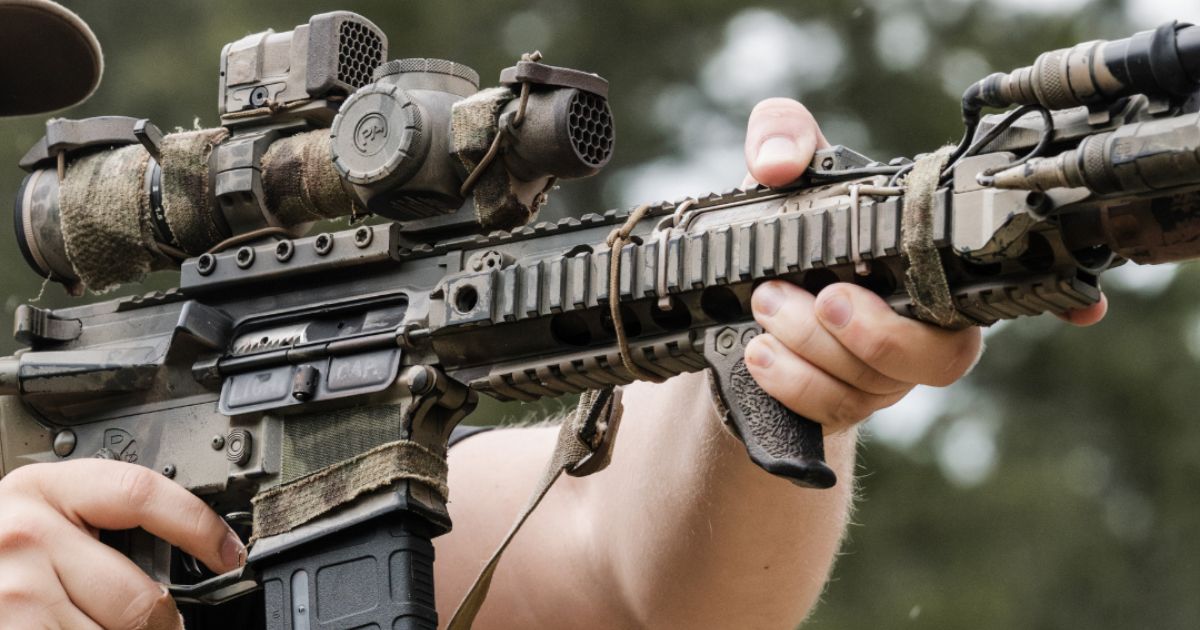
This is also a good time to evaluate rifle retention and sling setup. A properly adjusted sling helps stabilize the rifle during movement and reduces unwanted shifting between positions. The aim is to eliminate avoidable gear movement before it becomes a distraction or a visual cue.
Check out Camouflage Cannot Fix a Poor Rifle Setup for more help.
Move
When movement becomes necessary, make it deliberate.
Avoid abrupt changes in speed or direction whenever possible. Move with a purpose rather than constantly adjusting, stopping, and starting. Controlled movement tends to attract less attention than repeated or unpredictable motion.
After reaching a new position, allow both your body and equipment to settle before making additional movements. This helps reduce secondary motion from gear sway, shifting equipment, or repeated posture corrections.
It also helps to limit movement to what is actually needed. Whenever possible, complete multiple tasks during the same movement. For example, if you need to access equipment and change your observation angle, doing both actions together may result in less overall movement than making separate adjustments throughout the observation period.
That does not mean avoiding movement altogether. It means moving intentionally and only when the task requires it.
Camouflage Works Best When Movement Is Controlled
Human vision is highly sensitive to motion, especially sudden or repeated movement. That is why effective signature reduction requires movement discipline, equipment stabilization, and deliberate decision-making in the field.
Explore One Hundred Concept’s purpose-driven gear designed to help stabilize equipment and reduce unnecessary movement.

Leave a comment
This site is protected by hCaptcha and the hCaptcha Privacy Policy and Terms of Service apply.