
 All Caps
 ScopeCaps
 LightCaps
 Red Dot Caps
 Night Vision Caps
 Thermal Caps
 Specialty Caps
 Lights
 Red Dots/HWS
 Magnified Optics
 Lasers
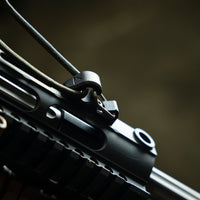 Slings
 Night Vision Devices
 Thermal
 Helmets
 Accessories
 Camouflage
 Water
Water
 Faraday
 EDC
EDC
 Apparel
Article: Why Gear Pouch Placement Matters for Signature Reduction
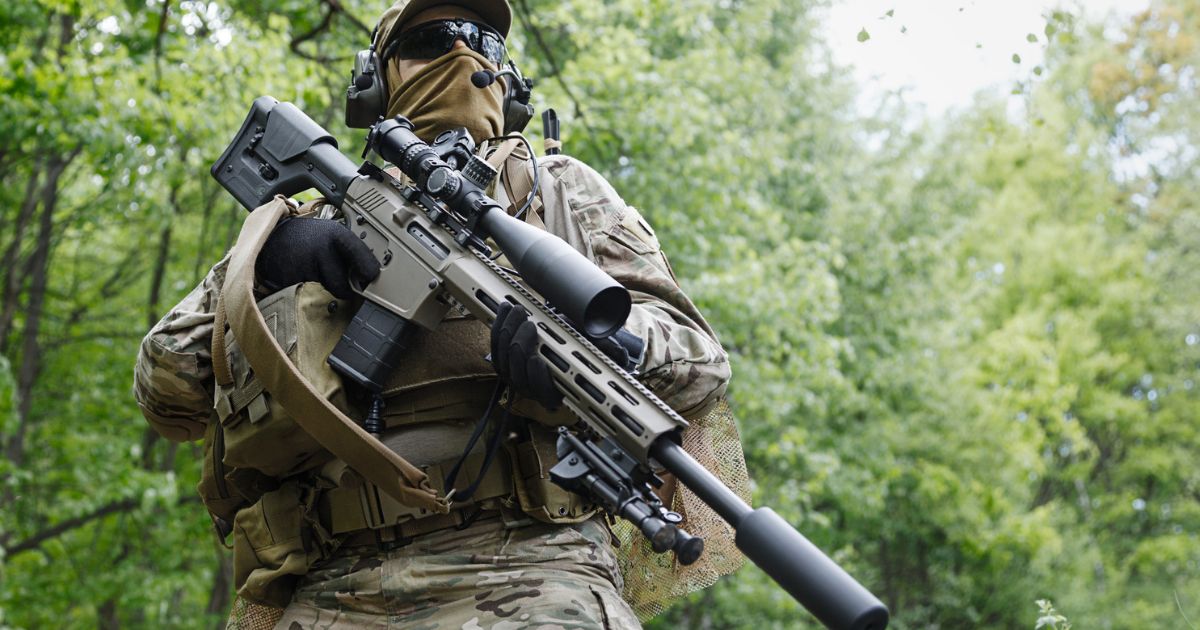
Why Gear Pouch Placement Matters for Signature Reduction
When deciding where to place a gear pouch, one of the first questions is usually simple: Can you reach it when you need it? Accessibility matters, but it isn't the only consideration. Retention, comfort, and interference with other equipment as well as your profile signature all affect where a pouch belongs.
Pouch Placement Can Change Your Overall Profile
Where you add equipment matters just as much as how much equipment you carry since pouch placement changes the shape of your loadout from different viewing angles.
Equipment That Sticks Out From the Body
Look at how far each pouch extends both outward and to the sides. Stacking pouches can add depth to the front of a plate carrier or belt, while equipment mounted farther around the sides can make your profile wider from certain angles.
Neither option is automatically better. The goal is to understand what additional shape you're creating and where it becomes visible. If two locations provide similar access, the one that keeps the pouch closer to your existing profile may be the better fit.
Placement Can Affect Your Silhouette in Different Positions
Your body position changes which parts of your gear extend beyond the rest of your profile. So a pouch that stays close to your silhouette while standing may become more noticeable when you kneel, crouch, or work around cover.
Make sure to check placement in the positions you use rather than judging the setup only while standing. For a closer look at how those changes affect your overall signature, see Managing Your Signature Through Position Changes.
Placement Can Affect How Gear Sits and Moves
Where you concentrate weight also affects how your equipment sits on your body. Loading one area heavily can cause a belt, carrier, or attached equipment to sag, shift, or rotate.
Don't try to solve this by making both sides visually symmetrical. Balance your gear around stability, access, and function instead. A well-placed pouch should help your setup stay where you intended without adding unnecessary movement or changing your profile as you move.
Loose and Dangling Equipment Creates Movement
Even if your pouches sit close to your body, loose equipment can create another problem. An unsecured item can swing or bounce as you move, adding motion outside your normal profile.
Secure Gear That Does Not Need To Move
Look for excess straps, retention cords, tools, and loose items inside or attached to your pouches. If something doesn't need to move freely, secure it close to the rest of your setup.
This doesn't mean locking everything down. Equipment you need to access quickly still needs enough freedom to work as intended. So only remove unnecessary movement without making your gear harder to use.
Check What Happens When You Move
You may not notice loose equipment while standing still. Walk, kneel, shoulder your rifle, transition between positions, and access your gear.
Watch for anything that swings, bounces, shifts position, catches on nearby equipment, or moves outside your normal profile. These movements can reveal placement problems that aren't obvious when you first assemble your loadout.
Testing your gear this way also shows whether securing one item creates a new problem somewhere else. If you want to go deeper into how movement itself affects visibility, see How Sudden Movement Reveals Even the Best Camouflage.
Cable Routing Can Create Unnecessary Clutter

Not every placement problem comes from equipment moving freely. Cables can remain relatively secure yet still create unnecessary loops, protrusions, or snag points around your rifle and gear.
Keep Excess Cable Close to the Setup
Avoid leaving more cable exposed than you need. Large loops or excess lengths can extend beyond the rest of your setup, catch on nearby equipment, or add clutter to an otherwise compact profile.
Route and secure excess cable close to the equipment when possible, while leaving enough slack for anything that needs to move during normal use.
Route Cables Around How You Use the Gear
A cable route can look clean but still cause problems once you start using it. Check that cables don't interfere with controls, block access to other equipment, or become restrictive when you shoulder your rifle or change positions.
Keep the setup low-profile where you can without sacrificing the movement or access you need to use your equipment.
Where You Place Reflective Surfaces Changes Their Exposure
Placement also affects when reflective surfaces become visible. Lenses, screens, glossy hardware, and similar surfaces may catch light differently depending on where they're mounted and which direction they face.
Consider Exposure From More Than the Front
A lens or screen that appears protected from directly ahead may still be exposed from the side, above, or as you move between positions. Look at your setup from multiple angles to see which reflective surfaces extend beyond surrounding equipment or become exposed as your orientation changes.
Protect Exposed Lenses Without Hurting Access
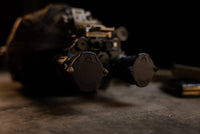
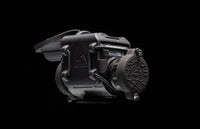
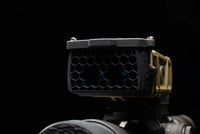
Some lenses need to remain in exposed positions to function properly. In those cases, a cover or cap can help protect the surface when you aren't actively using it. Choose protection that doesn't make the equipment harder to access when you need it, like the One Hundred Concepts' optic covers and lens caps.
Placement still comes first. A cover can address an exposed lens, but it shouldn't replace checking whether the equipment itself is positioned appropriately for your setup.
Evaluate Gear Placement From More Than One Angle
Once your loadout is assembled, don't judge gear placement only by looking down at it or standing in front of a mirror. Check it from the front, sides, and rear, then repeat the process while standing, kneeling, going prone, shouldering your rifle, and accessing your equipment.
As you test the setup, look for five things:
- Protrusion: What sticks farther out than necessary?
- Movement: What swings, bounces, shifts, or rotates?
- Clutter: What straps or cables extend beyond the rest of the setup?
- Exposure: What lenses, screens, or reflective surfaces become visible from different angles?
- Interference: Does fixing any of these problems make important equipment harder to access or use?
Change one thing at a time. Reposition a pouch or accessory, repeat the same movements, and compare how the setup behaves. This makes it easier to tell whether you've reduced unnecessary profile without creating a new access, comfort, or function problem somewhere else.
Good Gear Placement Balances Access and Profile
Gear should remain accessible and functional for its intended purpose. Once those requirements are met, small placement changes can help reduce unnecessary protrusions, movement, exposed surfaces, and other signature reductions.
Explore One Hundred Concepts' purpose-driven gear to find practical ways to manage your setup without adding unnecessary bulk.


Leave a comment
This site is protected by hCaptcha and the hCaptcha Privacy Policy and Terms of Service apply.