
 All Caps
 ScopeCaps
 LightCaps
 Red Dot Caps
 Night Vision Caps
 Thermal Caps
 Specialty Caps
 Lights
 Red Dots/HWS
 Magnified Optics
 Lasers
 Slings
 Night Vision Devices
 Thermal
 Helmets
 Accessories
 Camouflage
 Water
Water
 Faraday
 EDC
EDC
 Apparel

White Light Discipline Is More Than Just Covering the Lens
Good white light discipline is not simply about covering the lens or avoiding accidental activation. It is about understanding how light behaves, using it intentionally, and recognizing how your decisions affect the visual signature you create.
What Is White Light Discipline?
White light discipline is the practice of controlling when, where, and how you use artificial light to gather information while minimizing exposure.
Whether you are searching a dark room, identifying something ahead, or navigating low-light conditions, every time you activate a weapon light or flashlight, you create a visual signature. Good white-light discipline is about collecting the information you need while limiting how much information you give away in return.
How White Light Reveals Your Position
As soon as you activate a light, it interacts with everything around you. Light spreads beyond the area you intended to illuminate, reflects off nearby surfaces, and changes the way people see movement, shapes, and equipment.
Understanding these effects helps you recognize that good white-light discipline involves more than simply pointing a light at your target.
Spill Can Illuminate More Than the Intended Area
The brightest part of a flashlight beam is the hotspot, but it is surrounded by a wider area of lower-intensity light known as spill. While the hotspot draws your attention, spill often lights areas you did not intend to illuminate.
For example, you may direct the hotspot at a doorway while the spill lights the surrounding walls, floor, or vegetation. That extra illumination can reveal more of your surroundings than you realize and make your presence easier to notice from other angles.
Reflections and Splash Can Give Away Your Position
Light rarely stops where the beam first lands. It reflects off walls, windows, polished surfaces, and light-colored terrain. This environmental reflection can carry light into areas outside your direct line of sight.
Light can also create a splash, where nearby objects are illuminated by reflected or scattered light rather than the beam itself.
A wall next to a doorway, the hood of a vehicle, or a pale rock face may glow even though you never pointed the hotspot directly at it.
In some situations, these reflections are more noticeable than the beam itself. Someone may never see the flashlight pointed in their direction, but still recognize reflected light nearby and identify the general area where it originated.
Light Can Change What Others See
White light also changes how people perceive the environment around you. It can create shadows, outline your silhouette, and highlight equipment or movement that would otherwise blend into the background.
For example, light passing around a corner may cast your shadow before you enter the space. A flashlight striking the ground behind you may outline your profile against a nearby wall. Even small movements become easier to detect once they are illuminated.
This is why signature reduction extends beyond simply managing the light itself. Every time you activate a white light, you also influence how your surroundings appear and what visual information others can gather.
Good White Light Discipline Starts Before You Activate the Light

Understanding how white light behaves is only half of the equation. Good white light discipline also depends on deciding when to use it, where to use it, and what you hope to learn before you press the switch.
Use Light Only When It Provides Information
Every activation should have a purpose, so use it when it helps you gather information you cannot get any other way.
For example, you may need to identify a person, inspect an area, or confirm whether an object is actually what you think it is. In those situations, the light gives you useful information that supports your next decision.
Positioning Affects What the Light Reveals
Where you activate a light is just as important as when you activate it. Using available cover, changing your angle, or taking advantage of the surrounding environment can reduce unnecessary exposure while still allowing you to see what you need.
In contrast, activating a light from an exposed position may reveal both your location and your movement more than necessary. Thinking about positioning before you activate the light helps you manage the visual signature it creates.
Momentary Activation Reduces Unnecessary Exposure
Many experienced users rely on momentary use. A brief burst of light lets you gather information, then return to darkness before deciding what to do next.
A common sequence is simple: activate the light, observe what you need to see, move if necessary, and reassess before activating it again. This approach limits how long your visual signature remains visible while giving you multiple opportunities to evaluate the situation.
By comparison, continuous illumination creates a more predictable visual signature. The longer the light stays on, the more time others have to identify its source and observe your position or movement.
White Light Discipline Continues After the Light Turns Off
Turning off a white light does not instantly erase the information it revealed. Even after the beam disappears, people may remember where the light originated, what it illuminated, or where they last saw movement.
That is why good white light discipline extends beyond the moment of activation. Managing your visual signature also means thinking about what happens immediately afterward.
Your Last Known Position May Still Be Compromised
Every time you activate a white light, you create a reference point. Even if someone only sees the light for a moment, they may remember where it came from and continue watching that area after the beam is gone.
This lingering awareness is part of your signature after activation. For that reason, what you do after using the light matters just as much as the activation itself.
Avoid assuming that darkness immediately restores concealment. Instead, recognize that your last known position may still influence where others focus their attention.
Avoid Repeating the Same Pattern
Patterns are often easier to recognize than individual events. Activating your light from the same location, using the same timing, or repeatedly exposing the same area makes your behavior more predictable.
Thinking about patterns reinforces the broader goal of signature reduction. Every decision, from when you activate your light to where you use it, affects how much information you reveal and how easily others can recognize your presence.
Equipment Supports Good White Light Discipline But Doesn't Replace It

The right equipment can support good habits, but it cannot make decisions for you. White light discipline depends on both your gear and how you use it.
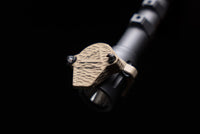
A light cover helps reduce unintended light before you activate your weapon light. It can help prevent accidental activation during movement, protect the lens from dirt and damage, and reduce unnecessary light emission until you need it.
Products like the One Hundred Concepts LightCap are designed to support that goal. By keeping the lens covered until you deliberately activate the light, they help eliminate one source of unnecessary visual signature without changing how you use your equipment when illumination is needed.
Once the light is on, however, the cover is no longer controlling your visual signature. The duration of the activation, where you point the beam, how light interacts with the environment, and what happens after you switch it off all depend on your decisions.
In other words, a light cover supports good white light discipline, but it cannot compensate for poor activation decisions.
The best results come from combining equipment that minimizes unnecessary exposure with techniques that help you manage the visual signature created every time you use a light.
White Light Is One Part of Signature Reduction
Managing white light is an important part of reducing your visual signature, but it is only one piece of the bigger picture. White light works alongside movement, sound, optics, shape, and gear management.
Reducing one signature while ignoring the others still leaves opportunities for someone to detect your position. The strongest approach is to think about signature reduction as a complete system rather than a collection of individual techniques.
If you want to learn more about managing your overall visual signature, start with The 7 S's of Camouflage: A Guide to Signature Reduction, then explore the other topics in the series:
- Why Signature Reduction Fails When You Only Focus on Optics
- How Sudden Movement Reveals Even the Best Camouflage
- Why Rifle Sling Setup Matters for Signature Reduction
- Is Scope Glint Real? What Shooters Should Know
If you're refining your equipment, explore the One Hundred Concepts LightCap collection to see how the right gear supports good white light discipline as part of your signature reduction strategy.

Leave a comment
This site is protected by hCaptcha and the hCaptcha Privacy Policy and Terms of Service apply.