
 All Caps
 ScopeCaps
 LightCaps
 Red Dot Caps
 Night Vision Caps
 Thermal Caps
 Specialty Caps
 Lights
 Red Dots/HWS
 Magnified Optics
 Lasers
 Slings
 Night Vision Devices
 Thermal
 Helmets
 Accessories
 Camouflage
 Water
Water
 Faraday
 EDC
EDC
 Apparel
Night Vision or Thermal Optics? Choosing the Right Tool
Night vision and thermal optics both help you operate when you can’t rely on your eyes alone, but they don’t show you the same information. Choosing between them starts with what you need the optic to do. Understanding how each technology works, what you can see through it, and where its limitations appear will help you choose a tool that fits the way you plan to use it.
How Are Night Vision and Thermal Different?
Night vision and thermal imaging both help you see when your eyes cannot provide enough information, but they work in very different ways. That difference affects what each technology shows you and, ultimately, which one makes more sense for the job.
How Night Vision Works
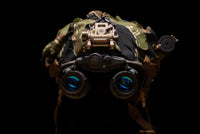
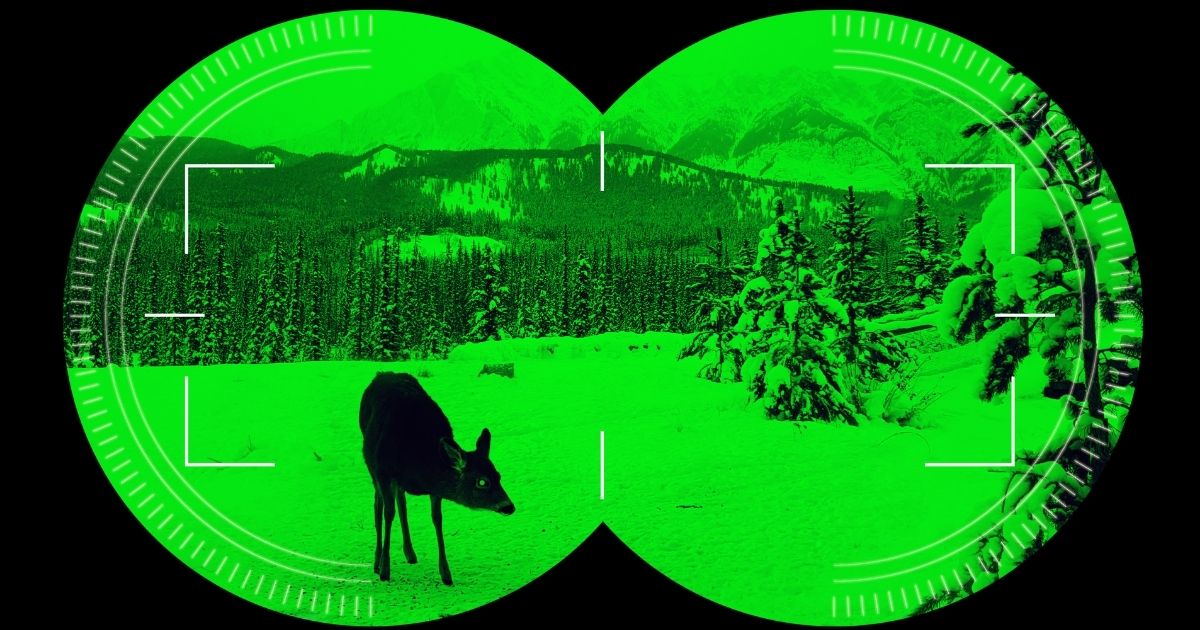
Traditional night vision uses image intensification. The device collects small amounts of available light from sources such as the moon, stars, or artificial lighting and amplifies it into an image you can see. Night vision goggles can give you a recognizable view of the environment.
When there is not enough ambient light, compatible infrared (IR) illuminators add light that night vision equipment can detect. IR lasers also work with night vision for specific applications without relying on visible light.
Most traditional night vision systems are analog, while digital night vision uses a sensor and display to create the image electronically. The technology differs, but both rely on light reaching the device to work.
How Thermal Imaging Works
Thermal imaging works by detecting differences in thermal energy. Instead of collecting visible or near-infrared light from the scene, a thermal device measures temperature differences and converts them into a digital image. Warmer and cooler areas appear at different brightness or color levels depending on the display mode.
Because thermal does not depend on visible ambient light, it works in complete darkness. A thermal optic does not need moonlight, starlight, or an IR illuminator to produce an image.
What Can You See With Night Vision vs. Thermal?
Thermal is especially useful for spotting temperature differences, while night vision gives you more visual information about the terrain and objects around you.
Night Vision Provides More Visual Context
Night vision goggles show the surrounding scene in a way that is closer to normal vision. You can see terrain, trees, structures, pathways, and other features that help you understand where you are and what is around you.
That context is especially useful when you're moving through an area. Seeing the ground, obstacles, and nearby equipment helps you navigate without relying on visible light.
Night vision can also work as part of a larger compatible setup. Depending on your equipment and application, that may include IR illuminators, IR lasers, and other night-vision-compatible gear.
Thermal Excels at Detection
Thermal makes it easier to notice something that might otherwise blend into the background. A warm animal, person, or recently operated piece of equipment will stand out clearly against cooler surroundings, even in complete darkness.
That makes thermal useful when your primary goal is to scan an area and find something quickly. Instead of relying on visible contrast, you are looking for differences in thermal energy.
Conditions still matter. Rain, high humidity, dense vegetation, and environments where objects are at similar temperatures reduce thermal contrast. Thermal also can’t see through solid objects, walls, or thick vegetation.
When Should You Choose Night Vision vs. Thermal?

Choosing between night vision and thermal starts with what you need to accomplish.
Choose Night Vision When You Need to Move and Navigate
Night vision is well-suited to situations where seeing the environment matters as much as seeing what is in it. It gives you visual information about terrain, structures, obstacles, and other features you may need to move around.
That broader view can make night vision goggles particularly useful when you need to:
- Navigate uneven terrain: Seeing changes in the ground helps you choose where to step and avoid obstacles.
- Maintain awareness of your surroundings: You see how objects relate to one another rather than viewing them by differences in heat.
- Recognize visual details: Shapes, edges, pathways, and equipment remain part of the scene.
- Use compatible IR equipment: IR illuminators and lasers support night vision when your setup and application call for them.
Choose Thermal When Detection Is the Priority
Thermal makes more sense when your main goal is to find a heat signature quickly. You can scan an area for temperature differences without depending on moonlight, starlight, or another source of light.
That makes thermal useful for:
- Scanning larger areas: Thermal contrast helps a person, animal, or warm object stand out from the background.
- Observation: You can locate heat signatures that may be difficult to notice with your eyes alone.
- Working in complete darkness: Thermal does not need visible ambient light to create an image.
- Finding something before studying it more closely: Thermal helps direct your attention toward areas that warrant a closer look.
Can You Use Thermal and Night Vision Together?
Yes. Thermal and night vision can work well together because each provides different information. You do not necessarily need a single device that combines both technologies. The more useful question is whether your task benefits from having both capabilities available.
How you combine the two depends on the job and your equipment. Carrying separate devices may give you more flexibility, but it also adds weight, bulk, and another piece of equipment to manage. For a purpose-driven setup, that tradeoff matters.
Combined and Overlay Systems
Some systems integrate thermal and night vision into the same setup. Depending on the equipment, thermal information may be overlaid onto a night-vision image, or the user may be able to switch between different viewing modes.
These systems provide the detection benefits of thermal while preserving more of the environmental detail available through night vision. They also add cost, weight, complexity, and power requirements.
A combined system is an option, but not an automatic upgrade. If separate night-vision and thermal devices already give you the capabilities you need, adding more technology may not make the setup any more useful.
What Should You Look for When Choosing Night Vision or Thermal Optics?

Once you know which technology fits the job, look at the features that affect how well the device performs it. Night vision and thermal use different technologies, so the specifications that matter most are not always the same.
What to Look for in Night Vision
With night vision, image quality depends on more than a single resolution number. For traditional analog night vision, resolution, signal-to-noise ratio, and overall tube performance all affect how clearly you see details, especially as available light decreases.
Field of view also matters, particularly when using night-vision goggles during movement. A wider view can make it easier to maintain awareness of the terrain and surroundings without constantly moving your head.
Next, consider how the device fits the rest of your setup. Helmet-mounted night vision adds weight in front of your head, and mounts, batteries, IR equipment, and protective accessories add more. Look at the complete system rather than the device by itself.
Compatibility matters for the same reason. Make sure the night vision device works with the mounts, helmet setup, IR equipment, and other accessories you plan to use.
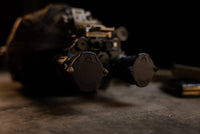
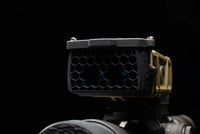
Also, consider lens protection and reflections. An exposed night-vision lens can reflect light, and dirt and debris can put the lens at risk. The NightVision HexCap addresses both concerns with an integrated hex pattern designed to reduce reflections, along with options for a blackout cover and sacrificial lens. This lets you account for lens protection and signature reduction as part of the night vision setup from the start.
What to Look for in Thermal Optics
Thermal devices have their own set of useful specifications. Detector resolution affects the amount of thermal detail the sensor captures, while thermal sensitivity affects how well it can distinguish small temperature differences. Refresh rate and display quality also affect how clear and natural the image appears during movement or scanning.
Field of view and magnification are important to consider based on how you plan to use the thermal device. A wider field of view can make scanning easier because you observe more of the area at once. More magnification narrows that view, but helps when examining something farther away.
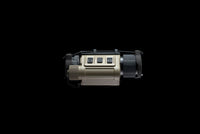
Also consider how you want to use the thermal device. Handheld, helmet-mounted, rifle-mounted, and clip-on systems each fit a different role. For example, the Nocpix MATE Ultra S60R is a 1280×1024 thermal clip-on designed to add thermal capability to a compatible daytime scope. Think about how each option affects weight, access, and compatibility with the equipment you already use.
Finally, look at the conditions the thermal optic is built to handle. Thermal lenses are exposed to dust, grit, debris, and impacts in the field, and protection becomes more important when you're carrying an expensive device alongside other equipment. So choose protection that fits those conditions without adding bulk or making the device harder to operate.
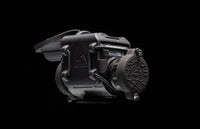
Finally, consider lens protection and field conditions. Thermal lenses can be exposed to dust, grit, debris, and impacts, so protection needs to fit the environment without making the device harder to access. For instance, the One Hundred Concepts ThermalCap covers the front and rear lenses when the optic isn't in use. Its custom-fit design keeps the cover close to the device, while the quiet removal system provides access without relying on a bulky flip-style cap.
Choosing the Right Tool for the Night
Start with the job instead of the technology. Think about what you need to see, how you will use the device, and how it fits with the rest of your equipment. Once you know the capability you need, you can build a setup around it without adding gear simply because it is available.
Explore One Hundred Concepts' night vision and thermal gear to find purpose-built accessories for protecting and managing the equipment you rely on.

Leave a comment
This site is protected by hCaptcha and the hCaptcha Privacy Policy and Terms of Service apply.